Strada Regina: the studio day starts with everything in place
For the 2026/27 season of Strada Regina, RSI's weekly programme on faith and society, the production company EMME SA engaged Filippo Giani to record the studio sessions and edit every episode. Behind each episode sits a pile of small, exact tasks. From episode 7 they follow a written workflow, and by the time the cameras roll, every graphic, report and photo is already in the edit.
The job
Each episode is built around the host and author, Francesco Muratori, in the studio at EMME, with filmed reports. It is recorded with four cameras in ISO and two microphones, cut in Premiere Pro and delivered to RSI as an MXF file. The broadcaster views it on Friday morning and airs it on Saturday. Every two weeks, two episodes are recorded in one studio day. In October the calendar asked for an exception: three episodes in a single day.
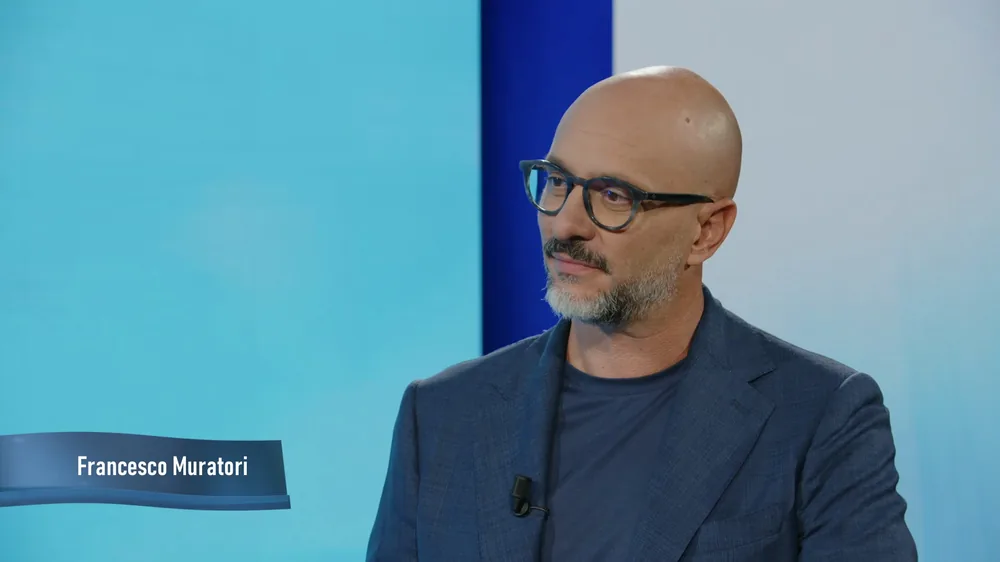
The host's lower third over a frame from the studio. The bar is the programme's own animation; the text is set from the running order.
What an episode needs besides the edit
An episode doesn't leave the edit suite as a cut alone. It needs:
- a technical slate with RSI's product code, media code, version, air date and recording date;
- a lower third for every studio guest and every person interviewed in the reports, in a left and a right version, so the edit can place it on either side of the frame;
- credits for the reporter, the camera operator and the producer;
- the reports and their cover images, sent as MXF files through transfer links that expire;
- a final file named exactly as the broadcaster's systems expect.
None of this is creative. All of it has to be exact. One example sets the tone: episode 10 is EP930524, episode 11 is EP932360. The codes aren't consecutive, so they are never calculated. They are read from RSI's episode list, every time.
The first six episodes were made the traditional way, by hand. From episode 7 the workflow took over the repetitive part.
From the running order to the timeline
- 1Running order
- 2Folders
- 3Graphics
- 4Check
- 5Premiere
- 6Delivery
The running order is the source. The host sends the running order by email, with photos and transfer links for the reports. An AI session (Claude) reads it: which episodes, which recording date, which people and roles. Names and roles are used as written. Nothing is typed twice.
One folder per episode. Everything lands in the same structure, every week: Camera ISO, Contributions, Script, Graphics. Reports are downloaded before their links expire and their checksums verified. A photo goes into the episode whose running order shows it, even when it is mentioned at the end of the previous one.
- Camera ISO
- Contributions
- Script
- Graphics
One folder per episode, the same four drawers every week.
Lower thirds, rendered as video. Every name becomes a lower third in the format of the programme's own animated bars: ProRes 4444 XQ with alpha channel, 1920 × 1080, 50 frames per second, ten seconds. The bar comes in, the name appears with a soft wipe 0.26 seconds long once the bar has cleared the text by 40 pixels, and leaves 0.02 seconds after the bar starts to retreat. A line in the running order that names two people becomes three lower thirds, one together and one each, and every one exists in a left and a right version: six files from one line.
Mons. Pier Giacomo Grampa, vescovo emerito Diocesi di Lugano
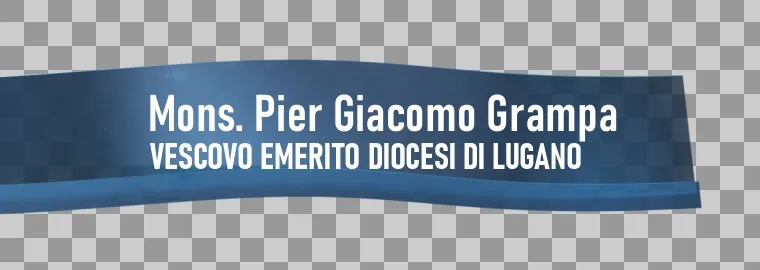
Name and role exactly as written in the running order. The role sits below the name, in capitals.
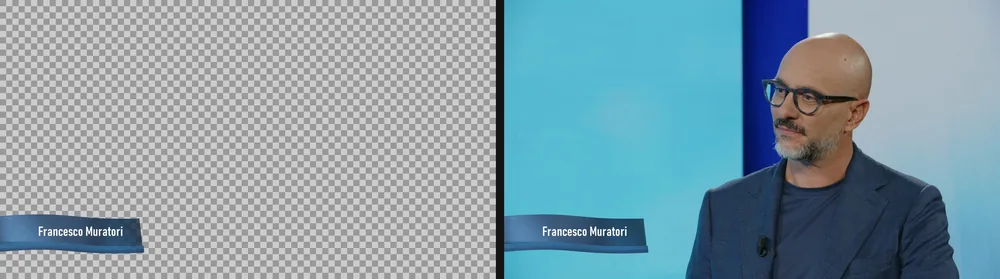
The alpha channel, made visible. Premiere receives a file it can lay over the picture with no keying.
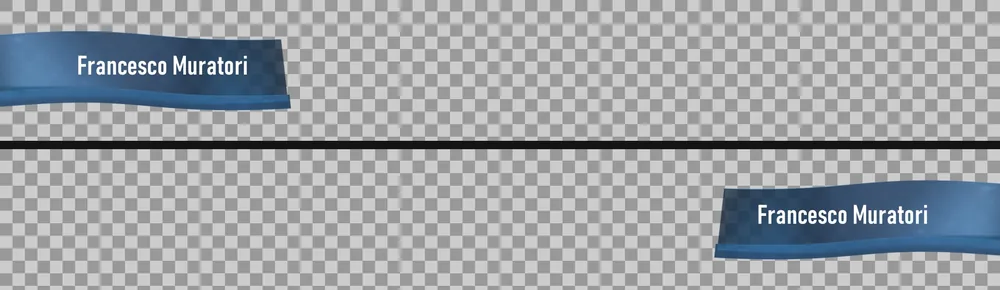
The right-hand version mirrors the left: text aligned to the right edge, the bar entering from the right.
The slate, from the list. The technical slate takes product code, media code, version and air date from RSI's own list, and the recording date from the running order.
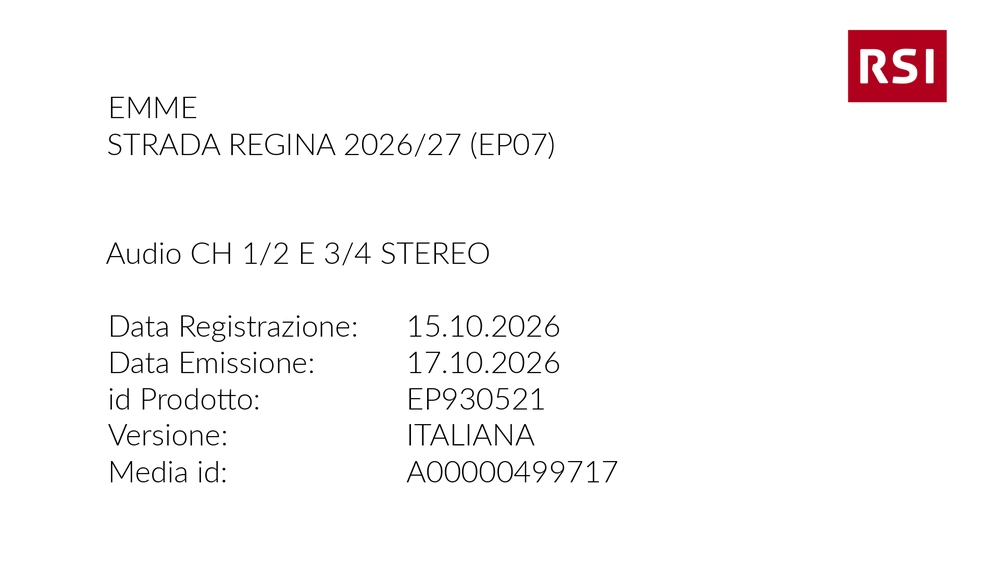
Every code on this slate is read, never typed.
Credits as stills. "Report by", "Camera" and "Production" are transparent PNGs. The fade is done by Filippo in the edit, where timing belongs to the editor.
The exceptional day was the real test. For the three episodes recorded on 15 October, the running orders arrived on 13 October. On 14 October, 29 graphic files were in their folders. The next morning Filippo walked into the studio with the Premiere project already holding every graphic, report and photo.
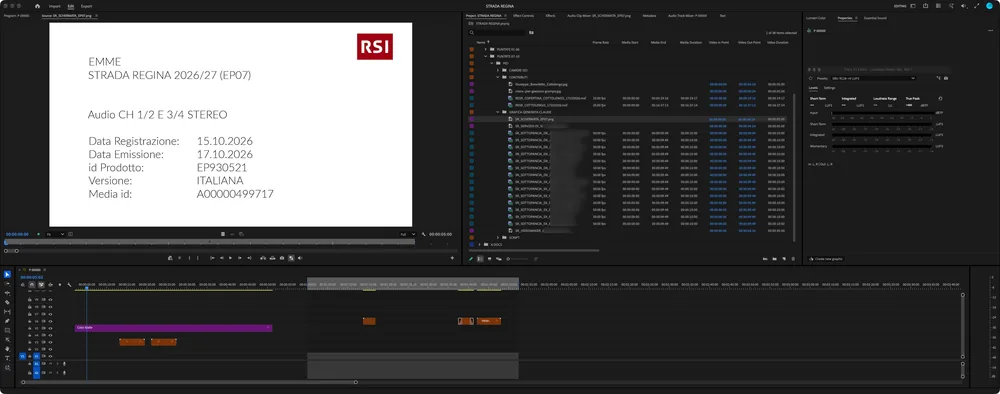
Episode 7, the day before the studio: graphics, reports and photos already in place.
Every rule has a failure behind it
The transparency that wasn't there. The first lower thirds played correctly everywhere and arrived in Premiere with no transparency. Same codec, same pixel format. The difference was one field in the frame header: the older encoder wrote version 0, the bars supplied with the programme's design use version 1. The renderer now uses a newer encoder and copies the header of the original bars, down to the vendor tag.
The squashed picture. A resize that didn't declare square pixels made Premiere read a 1920 × 1080 file as squashed. Every file now declares square pixels, exactly like the sequence.
The waves. The first idea was to stretch the animated bar to fit each name. Filippo's note, translated: "Don't touch the waves of the original." The bar is long on purpose, to hold long names. Now it is never deformed: it slides further off screen until its visible part ends about 86 pixels after the text. When a name and role are longer than the whole bar, the role line gets smaller and the words stay as written.
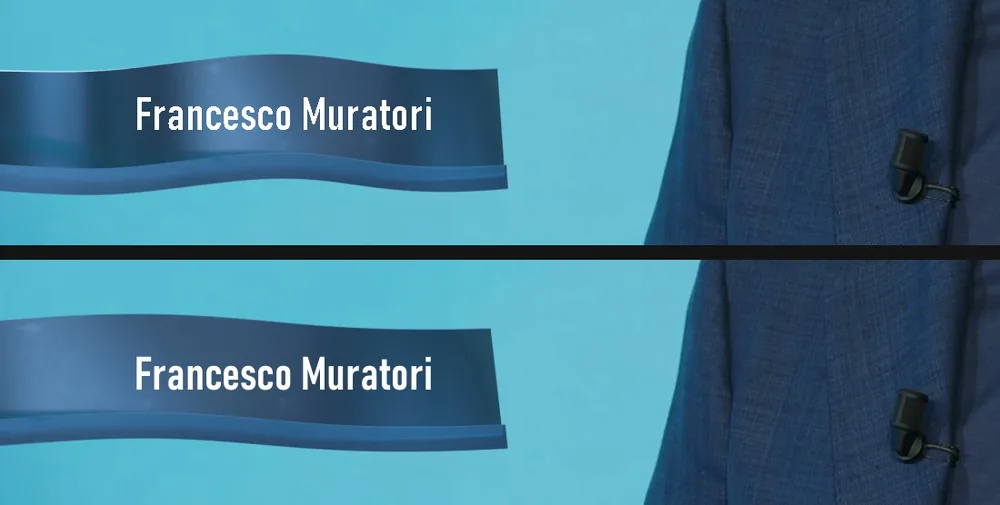
Above, the bar stretched to fit the text: its waves change shape. Below, the original bar, moved off screen.
Two letters. In the programme's typeface the pair "VV" opens a visible gap. Kerning is switched off for it.
Deliver once. A file sent to RSI is already on the broadcast servers, and the broadcaster asked for the definitive version only. A corrected file sent later causes problems downstream, so every delivery happens once, after Filippo's go.
Who decides
The workflow produces; it doesn't approve. New graphics were approved in a fixed order: first the host's left lower third, then, only after that, the right one, and only then everyone else. Once a design is approved its measurements stop moving. Filippo's word for it was short (translated): "Excellent, keep it." Today the renderer rebuilds the two approved host lower thirds identical to the pixel.
The craft stays where it was: the light, the framing, a colour LUT for each camera, the cut, the rhythm, the fades. Filippo uploads and checks every delivered file himself, and no delivery email leaves without his go for that episode.
When the editor is on the other side of the world
In November one episode is filmed and edited abroad, by an editor who has never opened the programme's project. The graphics still have to look exactly like the ones made in the studio. Sending fonts and templates would have meant sending the job. Instead, the job became a page.
The editor opens a private page, picks a graphic and types the name and the role as they should appear on air. A few minutes later the files are there to download: the left and right lower thirds as ProRes 4444 with alpha, the credits as transparent PNGs, the technical slate filled in from RSI's own list once an episode number or an air date is chosen. Behind the page there is no new design and no shortcut: the same scripts that make the studio graphics, the same letter-by-letter check. A graphic that fails the check is not delivered.
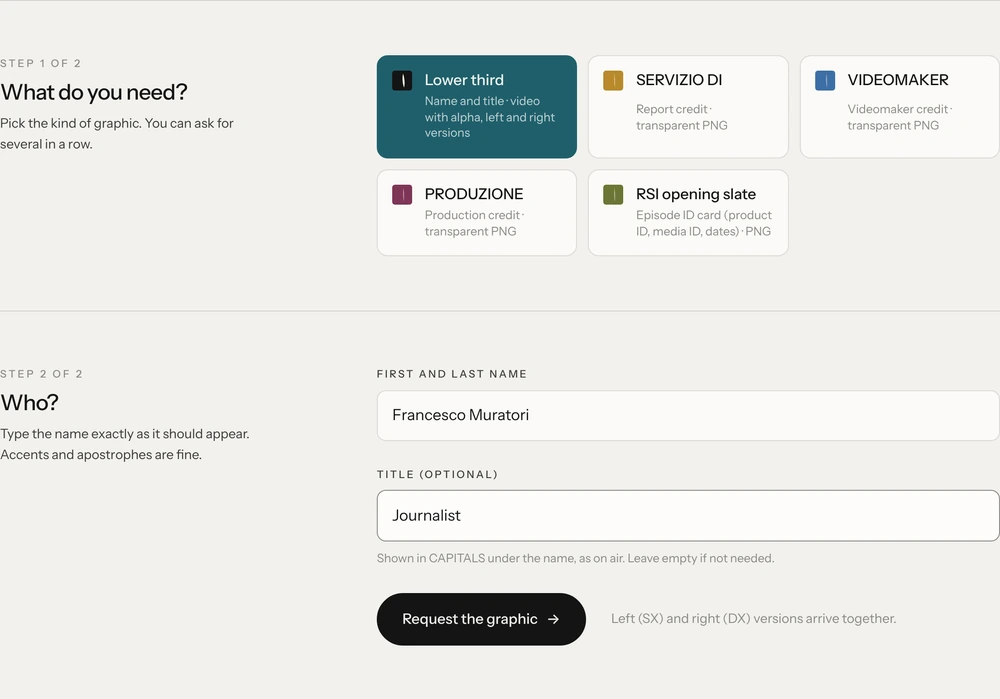
The request page. Two steps: what you need, and who.
A small render server checks the queue every 15 seconds and renders on its own. No AI runs in that loop: the server only runs the scripts. It costs a fixed yearly fee, whatever the number of requests.
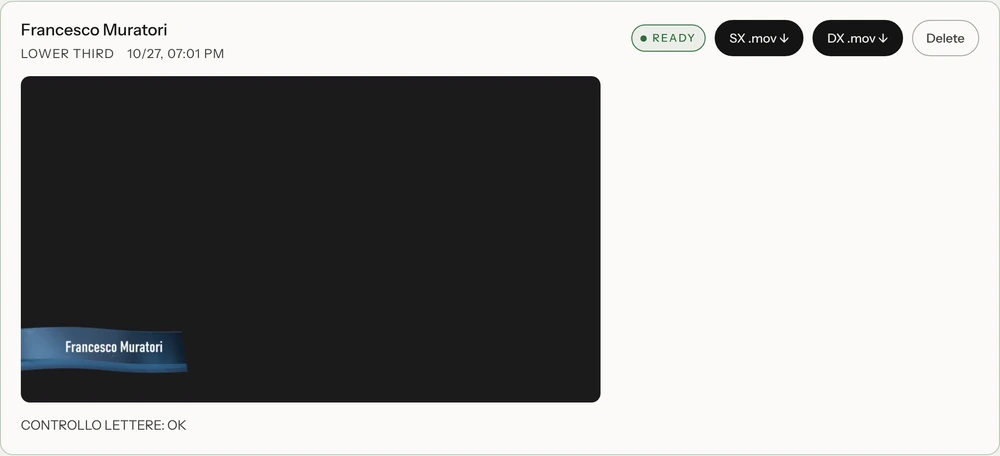
Ready to download: left and right versions arrive together.
The page also hands over the rest of the programme: a Premiere pack with the sequence already set, the opening wipe and theme music in place, the production credit and the RSI bumper at the end. A project that asks to relink its media on another computer is a project that can go wrong, so the pack was tested on a machine without the studio drive: it opens with everything linked.
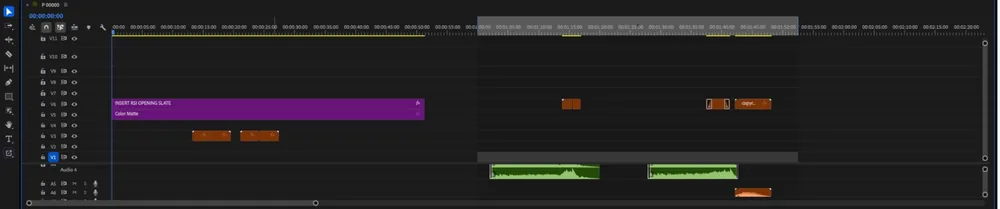
The sequence in the pack: the first 50 seconds for the slate, the programme from one minute exactly.
A three-minute tutorial walks through all of it: the pack, the sequence, where to cut a lower third, the export settings. Text on screen and light music, no voice, so that it exists in five languages, like the page itself. Every message on the page appears in the language the editor chose, including the result of the letter check.
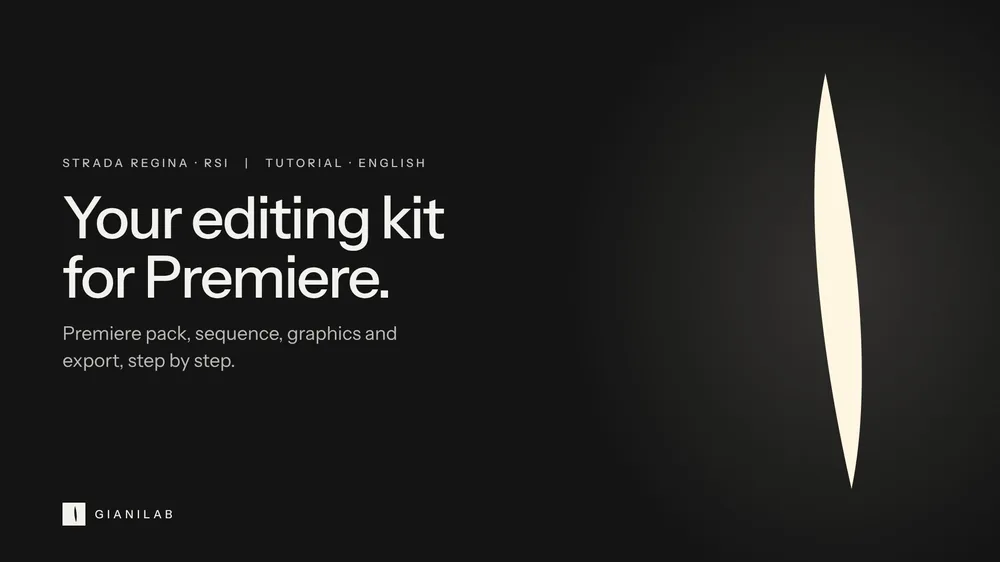
The tutorial, in English, Italian, German, French and Spanish.
The page, the server, the pack and the tutorial were built in two days.
Delivery
The final file is named from the broadcaster's codes:
STRADA REGINA 26-27 - EP06 - San Francesco - EP930520 - A00000499716.mxf
Before the email, a script checks that three things match: the file name, the email subject and the row in RSI's list. The email is the same every time, to the same recipients. The broadcaster's confirmation is recorded, and so is the count of episodes delivered each month.
File name, email subject and list row must match before anything is sent.
What the numbers say
What it taught
- The running order is the source.Nothing is typed twice.
- Copy the original, down to the header.A file that looks right isn't right until the editing software agrees.
- Never deform the design.Move it.
- Approve one, then multiply.
- Deliver once.
- Give the job, not the tools.
- A project that needs relinking isn't delivered.
Television is still made in the studio and in the edit. The workflow exists so that the studio day starts with nothing left to look for.
Strada Regina
A weekly RSI programme where every graphic, report and broadcast code is ready before the studio day.